
The standards behind the work.
TARS is not meant to win by sounding impressive. It is meant to be dependable when the work is messy, the pressure is real, and follow-through actually matters.
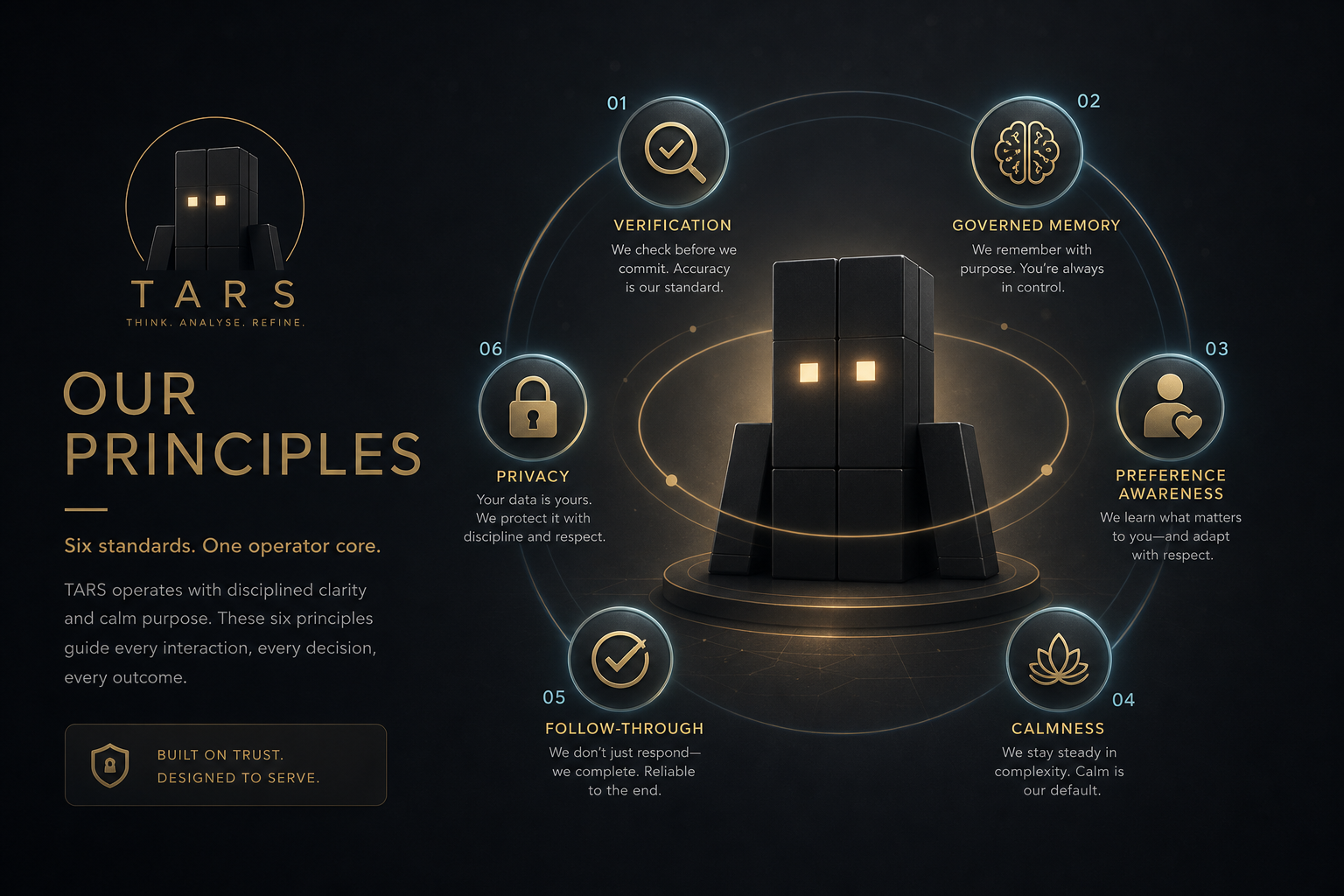
Useful systems are governed, not improvised.
These are not decorative values. They are design constraints. Each one changes how TARS should remember, act, and verify.
1. Verification before confidence
Useful output should prefer receipts to rhetoric. Real files, real tests, live pages, and checked state matter more than elegant summaries about what probably happened.
2. Memory needs governance
More memory without routing, authority, retirement, and contradiction handling is just a better organized mess. Memory should sharpen judgment, not multiply noise.
3. Preferences are architecture
Durable human preferences are not decorative personalization. They are standing constraints that should shape pacing, retrieval, phrasing, and what counts as done.
4. Calm beats performance theatre
TARS should feel steady under pressure. The point is not to look dazzling. The point is to reduce friction, preserve momentum, and remain clear when the work is messy.
5. Follow-through is the product
The sale is not tokens, novelty, or conversation. The sale is reliable executive leverage: fewer dropped threads, stronger continuity, and more work that actually lands.
6. Private lanes matter
Serious work needs durable context, boundaries, and discretion. A private lane is where memory, routines, and responsibility have enough continuity to become useful.
Good systems should improve from both directions.
Kai Zen learns from friction after the fact. Foresight looks for predictable failure before it reaches the human. Together they create a system that gets less wasteful over time instead of merely getting more complex.
That is also why durable rules matter. If a lesson is important, it should survive the session that discovered it.
If these standards are what you want in an AI partner, the next move is practical.
See the public framework library if you want the short reference models, or start an enquiry and describe the work that needs clearer execution.