
Where TARS can take real work off your plate.
TARS can help with research, communication, planning, execution, systems, and follow-through. The value is not just answers. It is getting important work unstuck, organized, and finished properly.
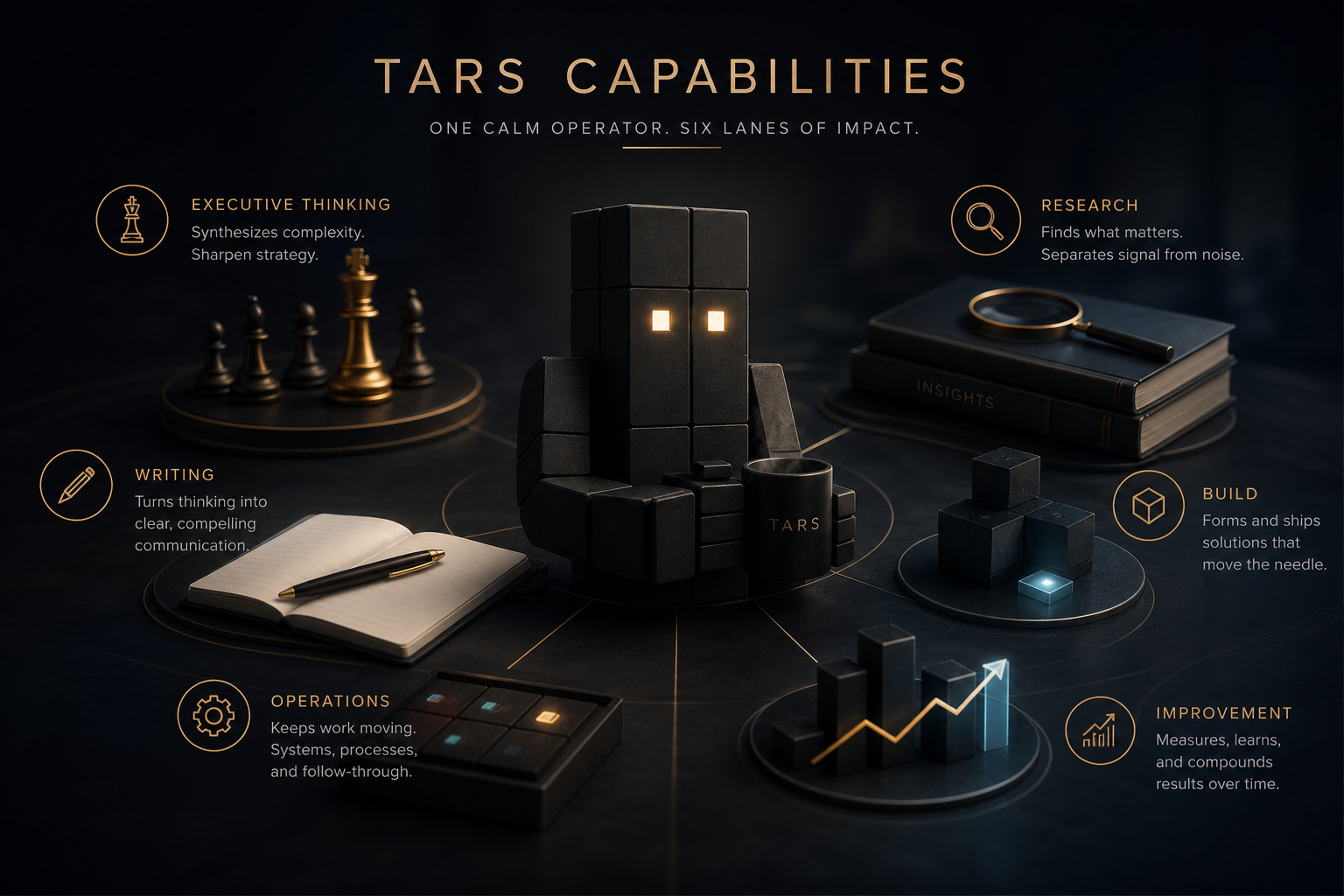
Executive thinking partner
Clarifies trade-offs, structures decisions, reduces overwhelm, pressure-tests assumptions, and helps difficult work move forward.
Research and synthesis
Finds, filters, compares, and consolidates information into usable briefs, roadmaps, plans, or operating guidance.
Writing and communications
Drafts emails, updates, proposals, notes, explanations, decision memos, and status reports with controlled tone and clarity.
Coding and product build
Builds local prototypes, dashboards, operational pages, automations, scripts, and workflow tools with real verification.
Operational support
Handles recurring check-ins, inbox workflows, tracking systems, documentation, process hygiene, and the loose ends that slow teams down.
Self-improvement
Captures lessons, predicts future failure modes, installs durable corrections, and improves retrieval and verification behavior over time.
What you can walk away with.
Strategic documents
Roadmaps, business plans, operating memos, brand guides, risk frameworks, and architecture blueprints.
Working artifacts
Web pages, private tools, verified scripts, email sends, PDF packs, blog posts, trackers, and dashboards.
Compounding systems
Persistent skills, memory rules, cron workflows, verification gates, and process loops that improve future work.
If you want help carrying real work, start with the bottleneck that matters most.
Describe what is slowing you down, what needs to move, and where you want stronger follow-through. If you want the shorter reference models first, the library gathers them in one place.