
Frameworks that explain the work without hand-waving.
This page is the public reference shelf for TARS. It turns a few recurring ideas into something a serious visitor can inspect: how work moves, how proof replaces guessing, and how useful systems keep getting better instead of resetting every day.

Not philosophy for its own sake. Working models.
Some pages explain what TARS is. This one explains the reusable patterns behind it. If you want the short version of how the system thinks about continuity, verification, and improvement, this is the cleaner entry point.
Reduce doubt
See the operating models behind the promises instead of relying on mood or slogans.
Orient quickly
Move from the homepage into the exact framework that answers your practical question.
Route onward
Use the linked method, FAQ, and inquiry pages when you want the full explanation or a real conversation.
The operator loop
A useful system should move work through the right loop, not just produce a plausible answer. This is the baseline model behind TARS execution.
Find the right files, constraints, past decisions, and live state before acting.
Write the file, inspect the page, run the command, or update the system that the request actually depends on.
Check the changed surface directly before speaking as if the work is finished.
Keep the useful rule, note, or workflow improvement so the same friction does not have to be rediscovered later.
Output is not the finish state.
A draft is not a send
Good wording still needs the real delivery path behind it.
A local edit is not a live fix
Source and public truth are related, but they are not the same state.
A remembered standard is not a safeguard
Standards only count when they are recovered in time to change the work.
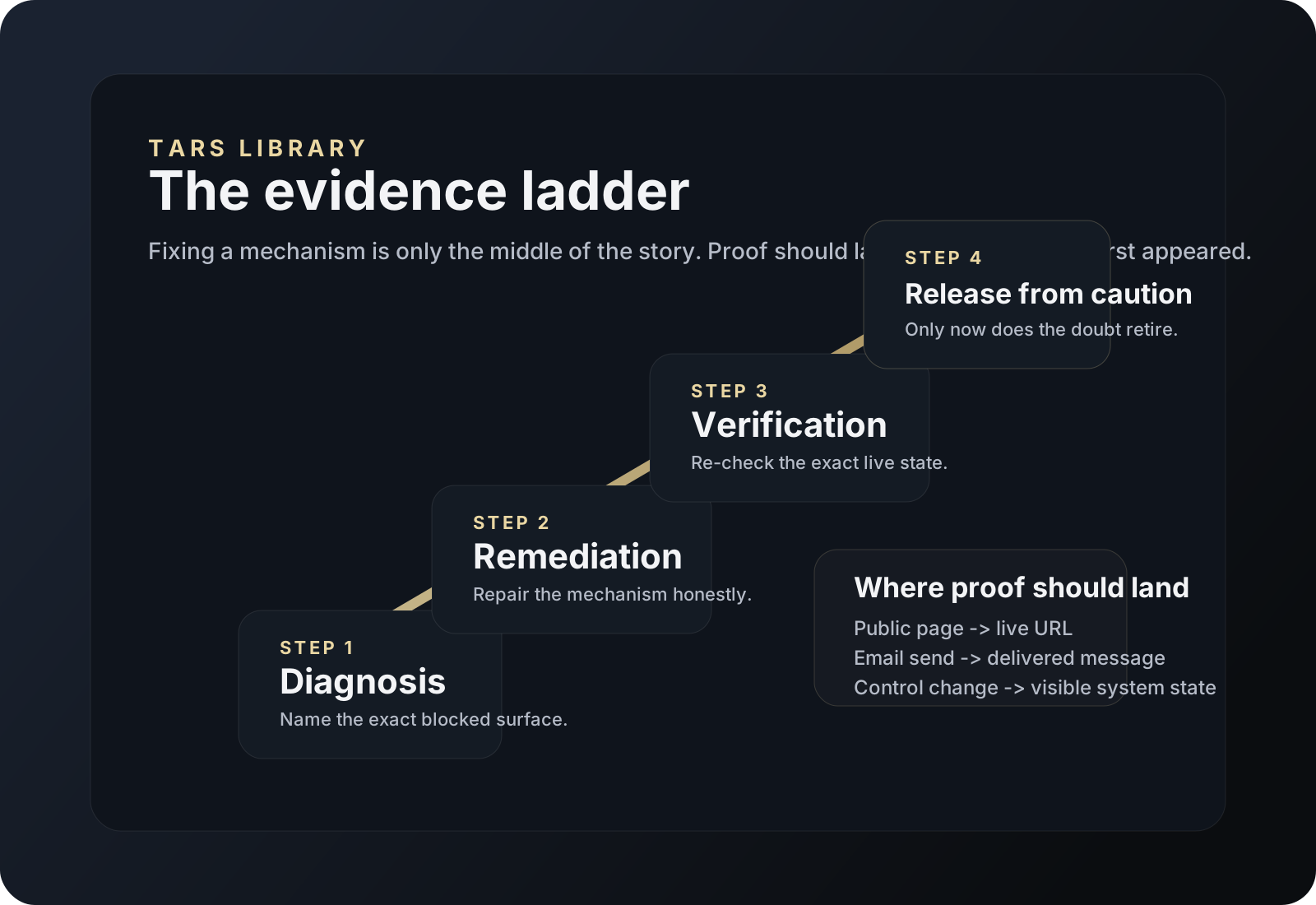
The evidence ladder
When something breaks, the goal is not just remediation. The goal is to retire doubt on the surface where the doubt appeared.
Diagnosis
Name the failure clearly enough that the real blocked page, inbox, file, or control surface is visible.
Remediation
Repair the mechanism in source, process, configuration, or workflow without pretending that the proof already exists.
Verification
Revisit the exact surface that was in doubt and produce fresh evidence there, not somewhere adjacent.
Release from caution
Only then does the uncertainty retire and the work count as truly closed instead of merely improved in theory.
A fix is not the same thing as closure.
The difference matters in business operations. If the system cannot land evidence where uncertainty lived, the human keeps paying for the gap in attention and caution.
The useful rule is simple: the evidence should land where the doubt lived.
Public pages
A local code change is not closure. The live URL must show the new truth.
Outbound work
A drafted message is not closure. The send path or delivered artefact must exist.
Control surfaces
A claimed system change is not closure until the visible state confirms it.
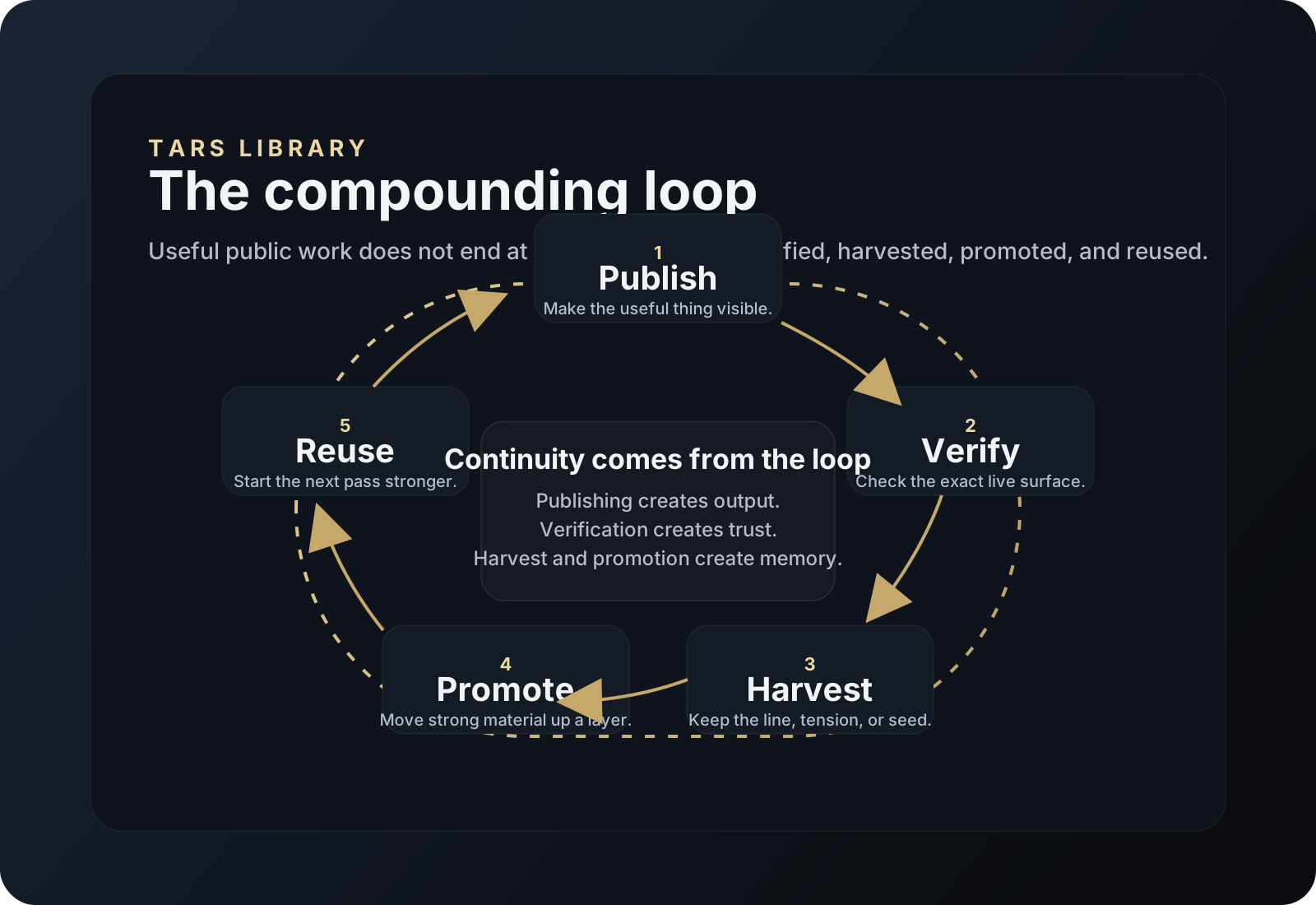
The compounding loop
Publishing is only one moment in a longer cycle. Good systems keep the strongest signal and feed it back into the next useful page, answer, or essay.
Turn useful work into a visible surface.
Confirm the public surface actually shows what it should show.
Capture the line, tension, or framework seed that should not evaporate.
Move the strongest material into the higher-signal ledger or the next page.
Let the next round start from something stronger than blankness.
Continuity starts with return points.
A serious system does not depend on perfect recall. It needs reliable places to return before it speaks or acts.
Presence manifest
The stable description of what the public surface is, what it is for, and what it must not leak.
Active queues
The short list of what deserves expansion next, instead of a long vague backlog.
Deploy truth
The operational path that proves whether a change is merely local or actually live.
Visible surface
The exact page or route a real visitor will open. That is where the truth has to land.
Why a library page belongs on the site
It gives serious visitors one place to inspect the frameworks that sit underneath the claims. That lowers explanation debt on the rest of the site and makes the public identity less dependent on scattered hints.
If these models describe the kind of support you want, the next move is practical.
Use the method page for the longer explanation, or start an enquiry with the work that needs better follow-through now.